A TANGLE OF INSPIRATION: APPLES, CATTAILS, AND LOTUS
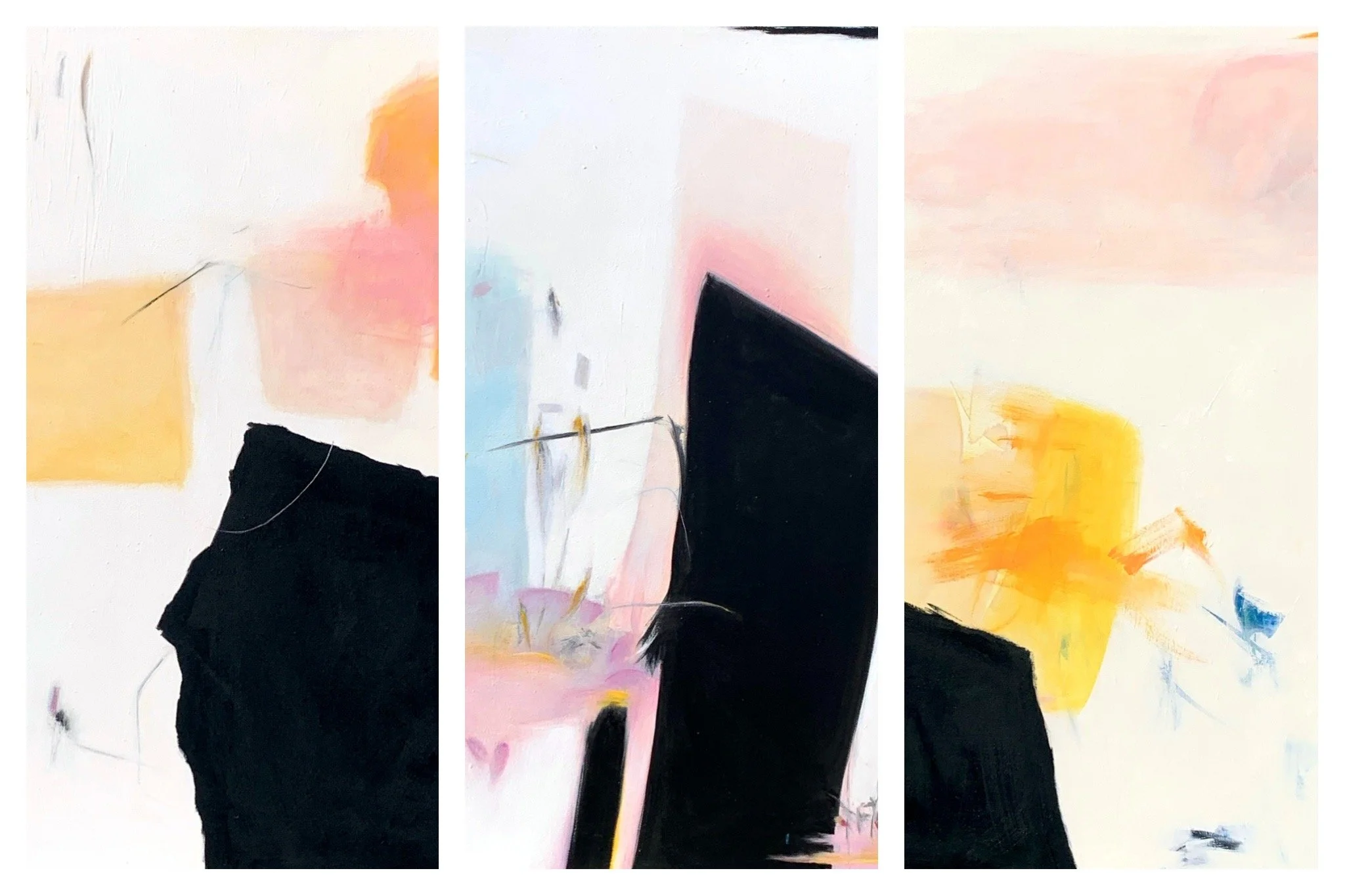
Words are an important part of the process in my work, and I generally know the title of a painting before my brush touches the canvas. Daydreams and Apple Trees was the first of these three, all finished this year. Then came Cattails and Memories, and next Sunset and the Lotus. They are a tangle of inspiration—the ebb and flow between present and past, place associations, and the experiences that follow us through time. I’ve included a bit of story about each panting in the post.
Words are an important part of the process in my work, and I generally know the title of a painting before my brush touches the canvas. Daydreams and Apple Trees was the first of these three, all finished this year. Then came Cattails and Memories, and next Sunset and the Lotus. They are a tangle of inspiration—the ebb and flow between present and past, place associations, and the experiences that follow us through time.
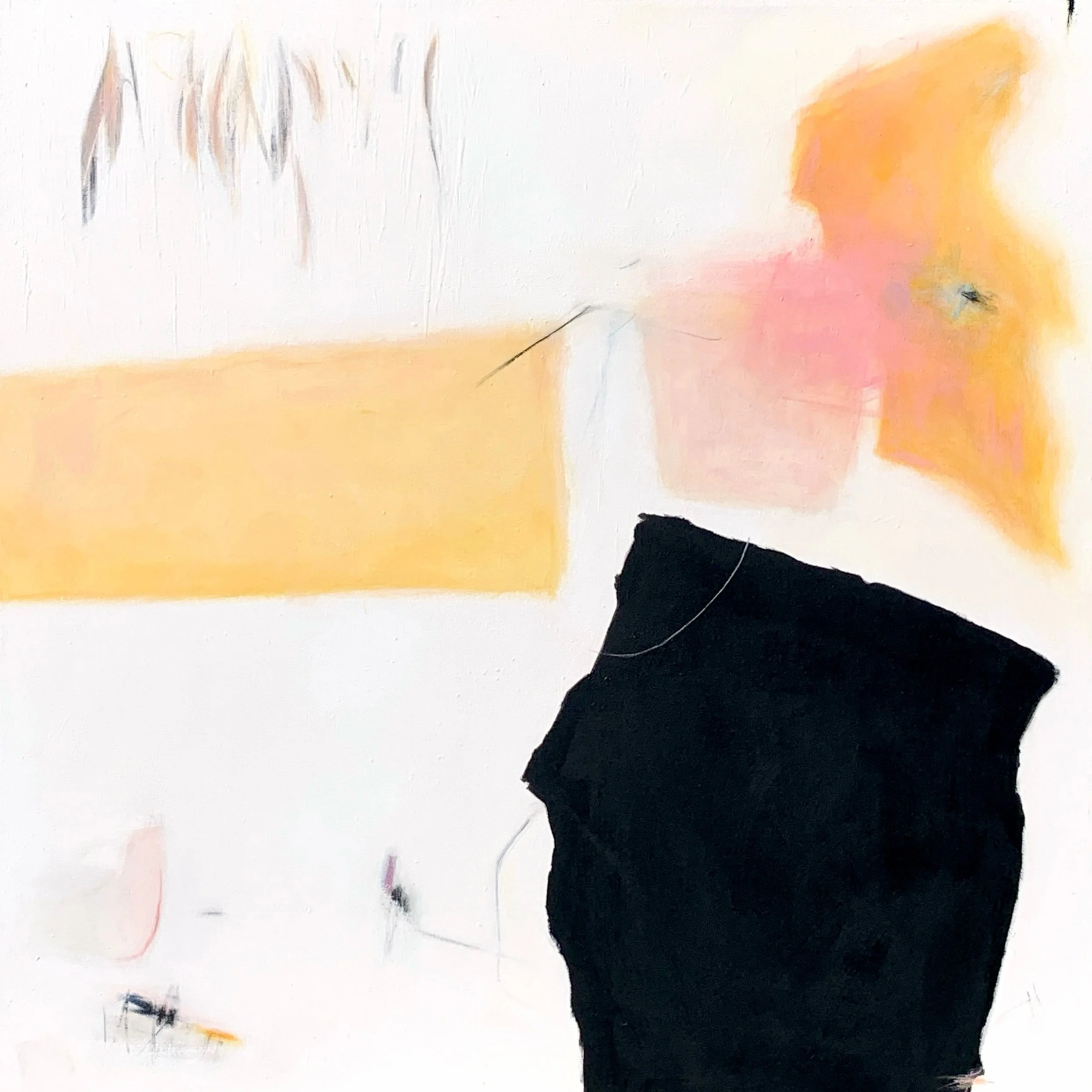
DAYDREAMS AND APPLE TREES, 4 ft by 4 ft, mixed media on canvas.
Daydreams and Apple Trees: Having grown up in Washington State, apple trees have always been a big part of my life. There are so many associations of self and place I have with apples, from the green apple tree high on the hill behind our house when I was just a little girl, to picking apples in orchards, to learning that apple trees (along with strawberries) are all part of the rose family. Over the years, apples have become a taste of home, a connection to past selves, all tangled with connections between family, strawberries, roses, and butterflies. An apple is not always just an apple, at least not for this artist…
At four years old, there were long summer days of jumping out of trees, watching big blue spiders behind the play house, picking rhubarb and chives, and hanging out at the neighbors while they built their house. All this is wrapped up in the small package of an apple. I might even add, that I thought of that apple tree, perched high on the hill behind our house, as my first friend. The apple is what kept me [feeling] close to home as I cycled through the back roads and villages of Mexico on my first bike-packing adventure. And then there is that old primary school adage “an apple a day, keeps the doctor away”. Daydreams and Apple Trees is about all of this—these things we carry with us—that connect us in time and place.
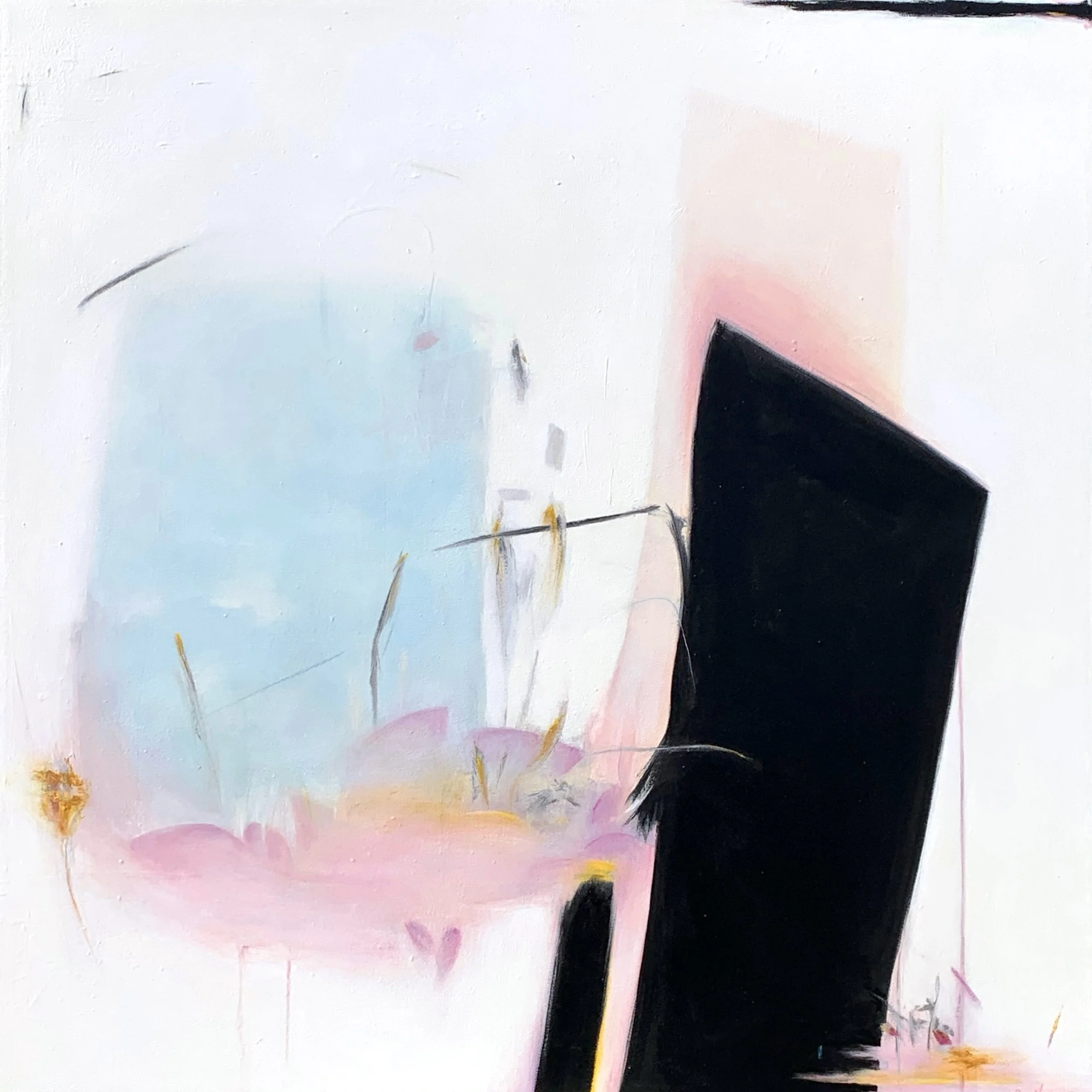
CATTAILS AND MEMORIES, 4 ft by 4 ft, mixed media on canvas.
Cattails and Memories: The gentle beauty of New Mexico is disarming. Pink skies, blue skies, and sun bleached grasses. Piercing sunshine. Big vistas, wide open spaces, snow capped mountains, desert peaks, and even cattails. I am both fully here and simultaneously full of so many other places. There is a tangle of place associations I’m experiencing—from the snow capped mountains, to the cattails in a neighbor’s pond, to that familiar forest green of the juniper—that are unwrapping so many memories. As I stare out across the horizon I see the cattails that once adorned my mother’s living room, there are lakes edged with cattails, children playing, soft sunsets reflecting on water, and butterflies flitting from one flower to the next. These butterflies becoming the lotus, landing on the water, their wings open wide revealing the [New Mexico] pink skies caressing the mountains that surround me.
What it is like to not know another place I do not know, but in knowing many places I know this: there is a flow from one to the next. Cattails and Memories is about that flow. It emerges for me from a cattail in a neighbor’s pond—jolting me into a whirl of time travel, a young girl chasing butterflies. I watch as a butterfly becomes the flower I’m holding …then I let go and watch it drape itself across the mountains, unfolding into the most glorious pink sunset glow.
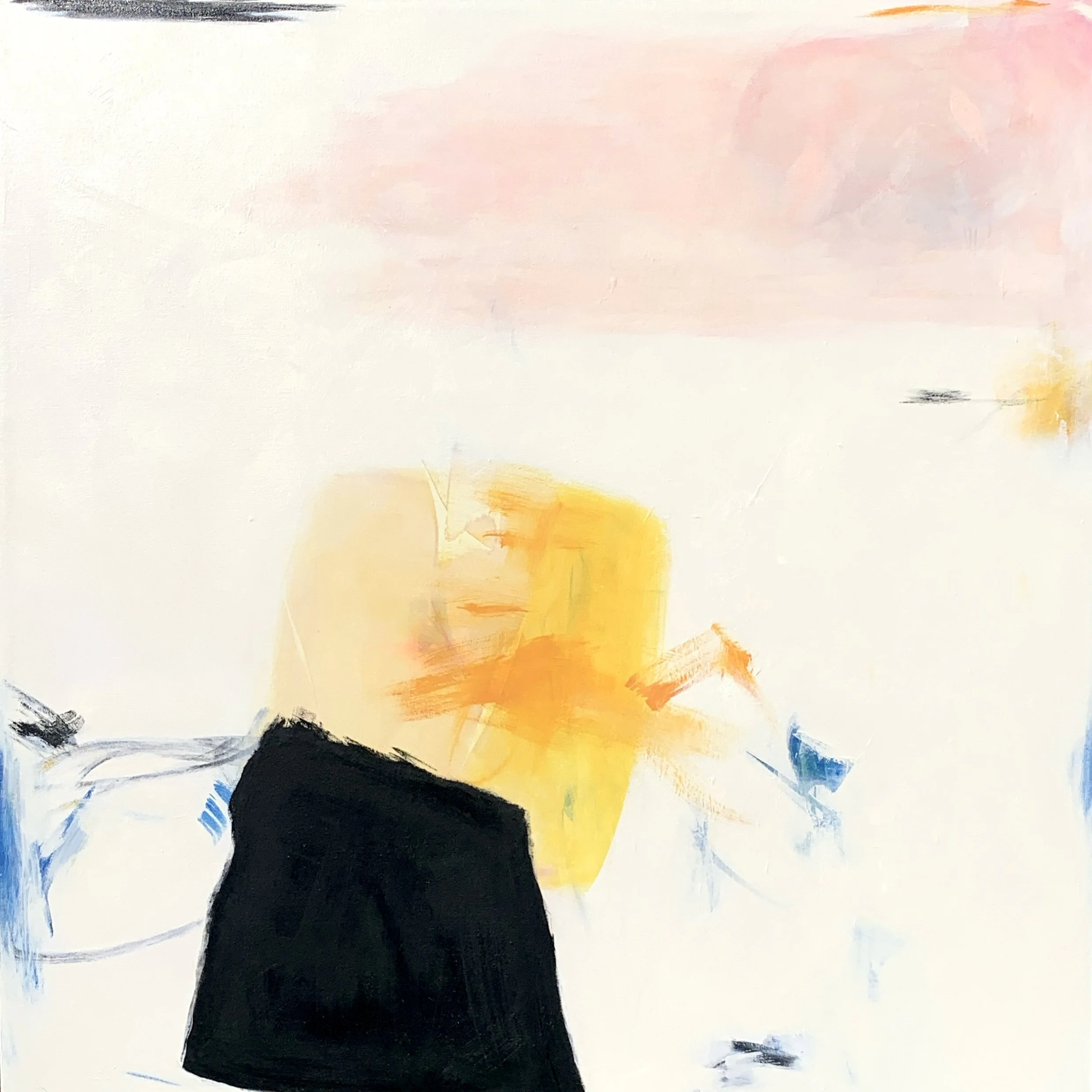
SUNSET AND THE LOTUS, 4 ft by 4 ft, mixed media on canvas.
Sunset and the Lotus: The lotus has entered my thoughts many times since returning from a recent trip in Southeast Asia. There is this real flower that I saw everywhere, and then there is this symbol of the flower, in sculptures and signage, cultural and spiritual, that has rooted itself deep within my psyche. It has become a symbol of connection for me—a bridge between place and self and time—all things connected in the universe. It requires letting go and becoming at the same time.
The lotus, while present in all the countries I visited, took on a greater significance and meaning during my time in Cambodia. It began with the crazy traffic in Phnom Penh. At first experience, it was utter chaos. Traffic weaving back and forth with no attention paid to lanes—motorcycles, tuk-tuks, and SUV’s moving in and out and around each other with only inches between them. But then my experience shifted—everything in slow motion, everything working together seamlessly. The initial appearance of chaos became the beating rhythm of cooperation …a cooperation that left me in a state of pure calm, connected, and somehow part of it.
My next experience was during my climb of the highpoint of Cambodia, Phnom Aural. Difficult to get to, way out past remote villages, and further yet down rough roads. We walked past farm fields, through arcs of bamboo, and deep into the jungle. There are three camps on the mountain, all of which have a small hut where monks come to live for months at a time, to meditate and immerse in nature. Shrines, with offerings placed on and around them, are present in each camp, and occasionally along the trail to the summit. We had a long conversation with one of the monks about happiness, joy, and freedom. Everything about this mountain felt sacred. It was an experience that has left me with the feeling of being connected—not just to a place, but beyond the place itself—deeper into the universe.
My final experience in Cambodia was Siem Reap and Angkor Archeological Park. The Lotus were in all the waterways here, pink petals spread wide revealing their inner secrets. Surreal pink skies, hand-carved temples, and banyan trees, everything steeped in ancient history. Night markets, party streets, and tuk-tuk rides …the soft caress of the cool morning air, stories of time etched in stone. The mysterious ancient and the familiarity of a modern buzz colliding between farms and city. The tourist, me, and a convergence of cultures.
It is here where I came to attribute meaning to the lotus and the experiences I had in Cambodia—a country that is ninety-seven percent Buddhist, a country where Buddhism has been present since the third century, and has been the state religion since the thirteenth century—bringing me full circle back to the conversation with the monk on Phnom Aural about happiness and joy and freedom, and to Phnom Penh where the chaos of throbbing traffic became the beating rhythm of cooperation …a cooperation that left me in a state of pure calm, connected, and somehow part of it. I am free, but I am not free, everything part of the same beat.
And this is Sunset and the Lotus …back in New Mexico—the magic of our pink skies connected to the surreal pink skies of an ancient city …the lotus, a beating rhythm of cooperation. It is a dance that is without but it is also within. It is a connection that flows between a grain of sand and the mountain.
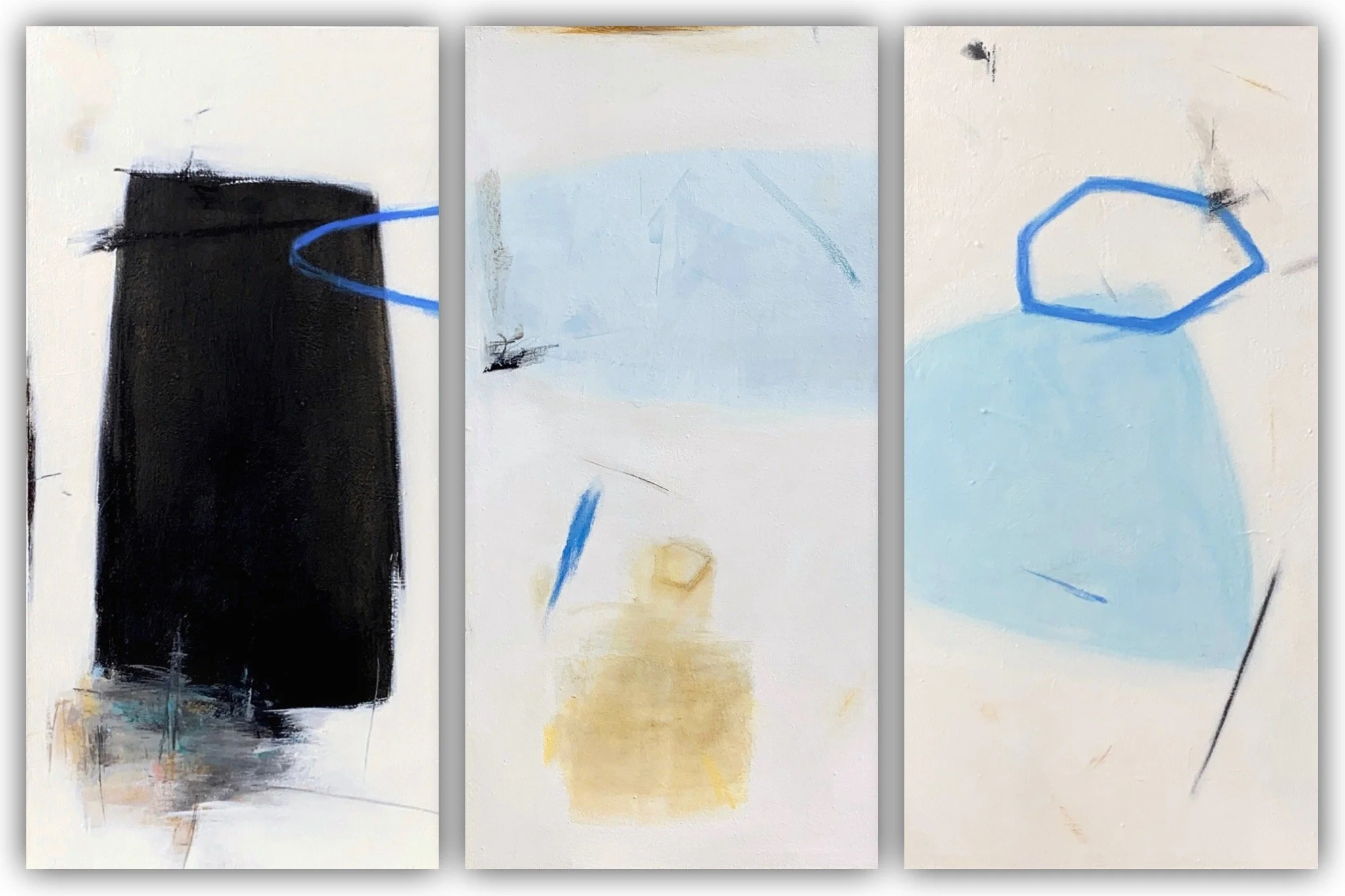
CONTEXT IN PLACE
These three paintings are inspired by the high desert, along the Turquoise Trail, in northern New Mexico …the cold glow of its moonlit nights, the warmth of its ever present sun, and the gentle beauty of its arid landscapes.
These three paintings are inspired by the high desert, along the Turquoise Trail, in northern New Mexico …the cold glow of its moonlit nights, the warmth of its ever present sun, and the gentle beauty of its arid landscapes. It is not my intention to paint actual landscapes—I paint the experience of them, what it feels like to be in them—that interconnection between place and self.
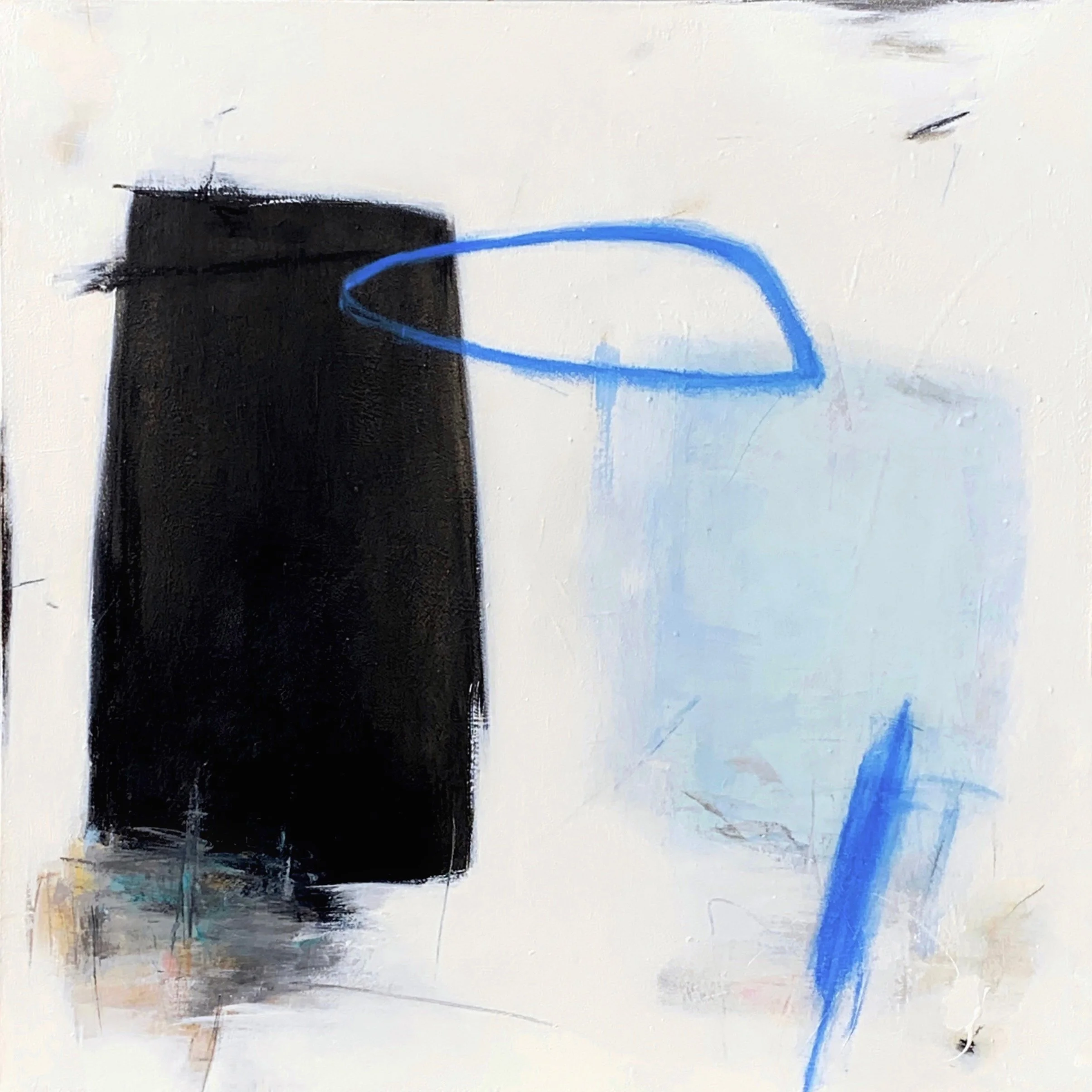
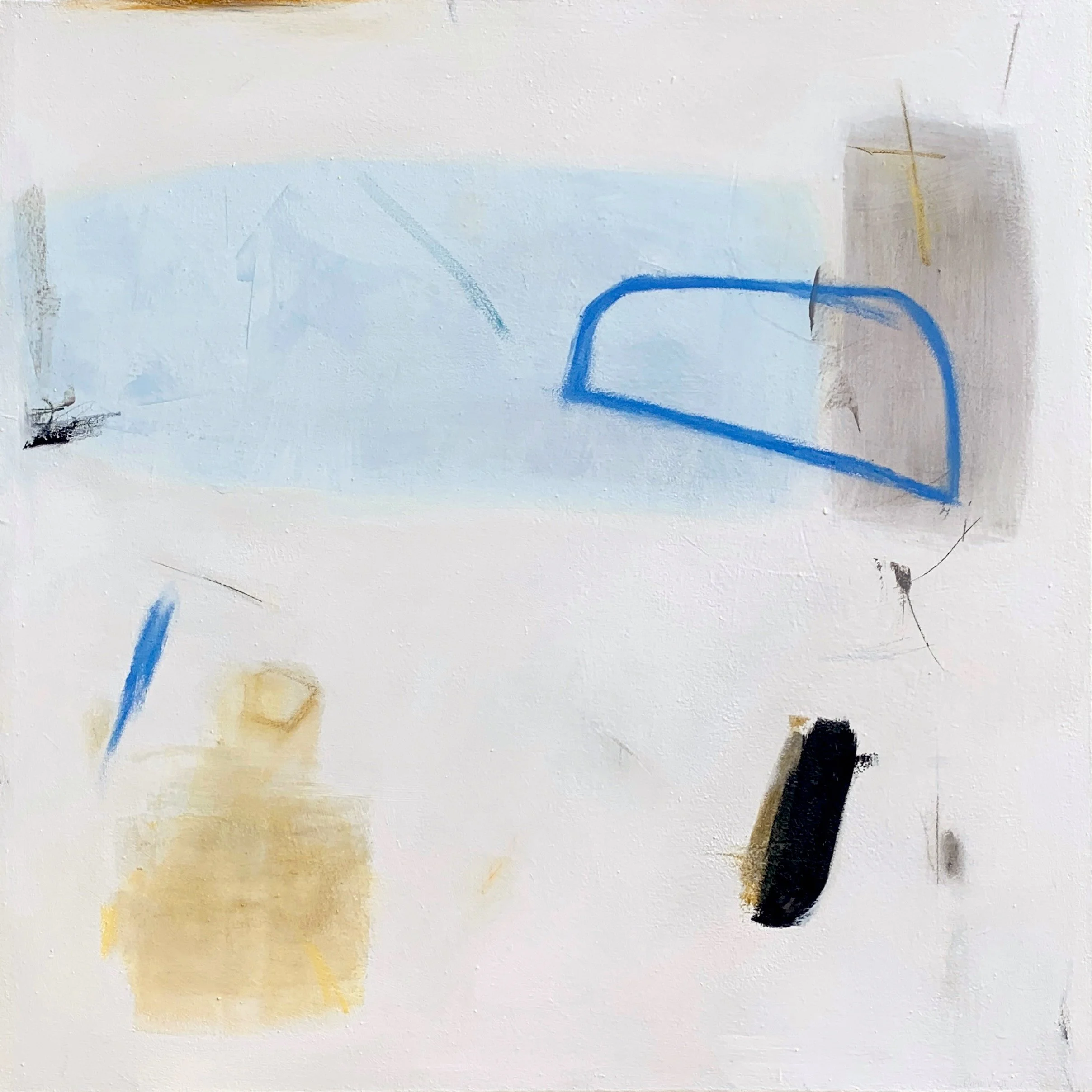
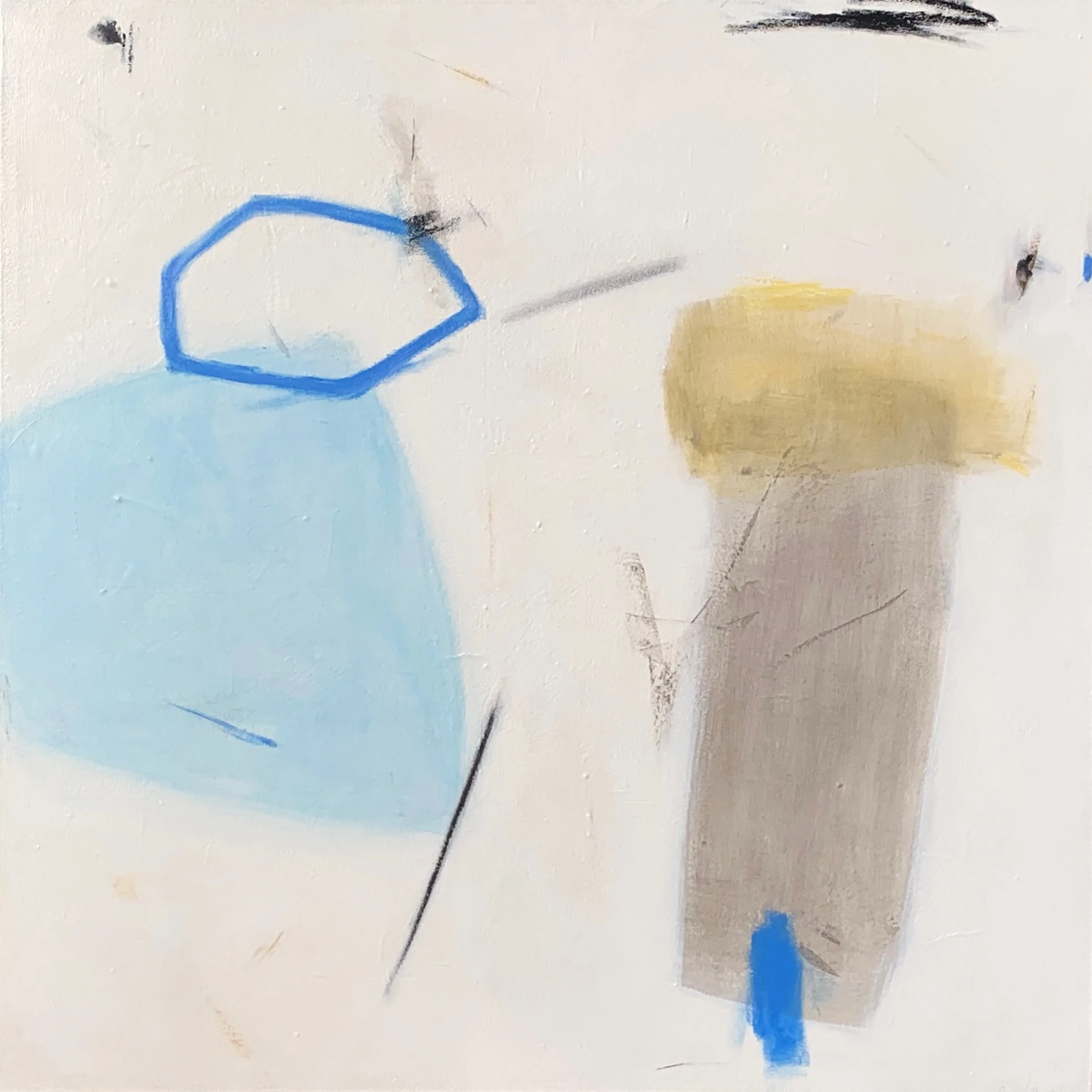
Place is not simply a geographic location on a map. It is deeply tied to the personal histories that we carry with us, the culture/s that have influenced an area over time, and the natural environmental elements that make up its location. I strive to capture this in my work, and in that, my work becomes both conceptual and literal, taking on the uniqueness of a place—its sights, sounds, colors—that feeling of space, the sun warming your skin, the sound of a bee nearby, the blurry flash of a bird that just passes your gaze.
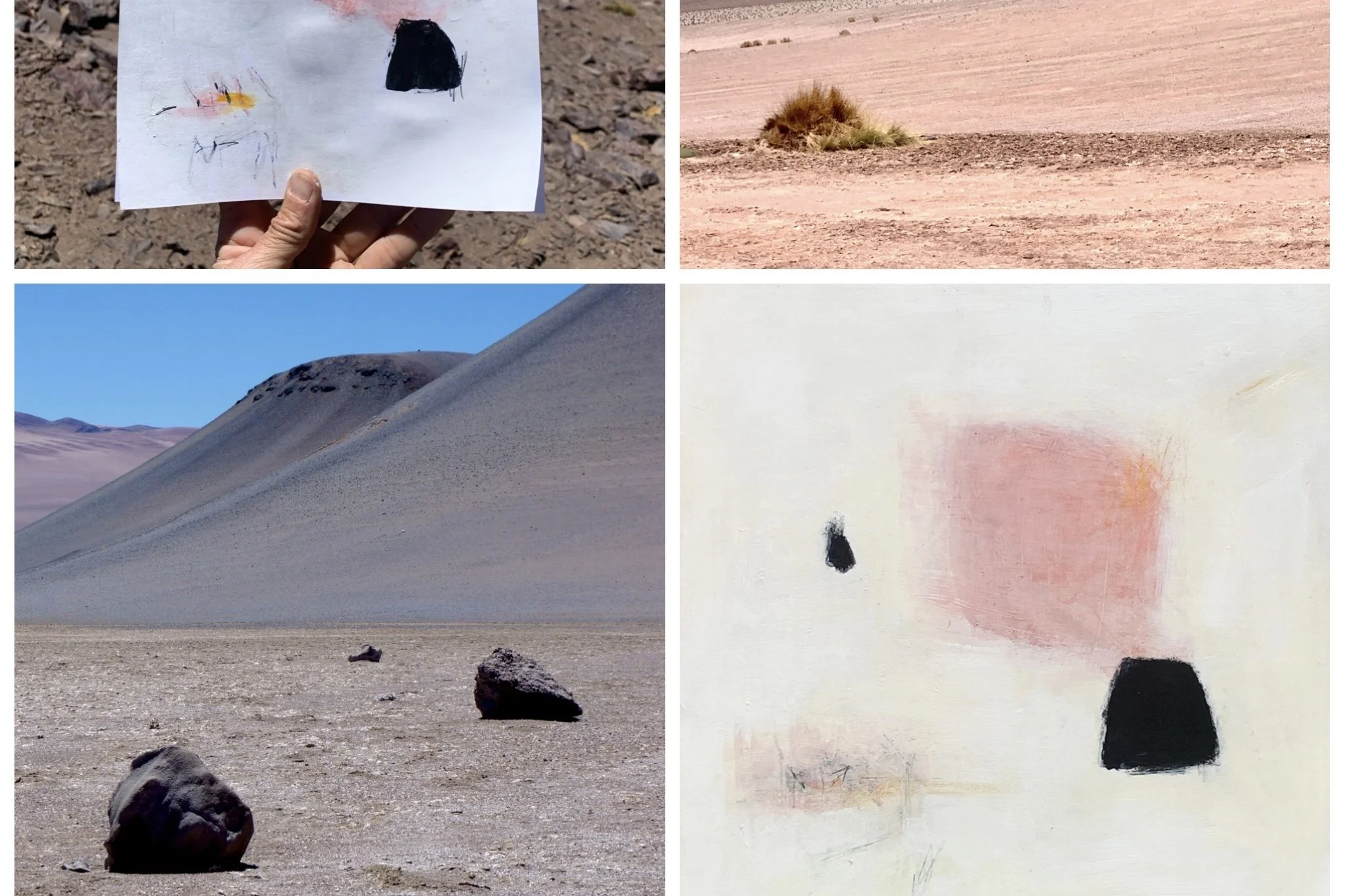
MY SHAPES AND MARKS - 3
Sometimes there is more of a direct relationship between specific places (their shapes & colors) and my work, like seen in these images, but more often than not my work is a conglomeration of places, landscapes, and experiences.
My inspirations are obvious to me, but I am aware that they are not necessarily always so approachable for others, especially if abstract art isn’t normally one’s thing. So this year I’ve been working on putting some of my photos together with my art to illustrate how I see things—how my shapes, compositions, and marks relate to how I view places. And while I am inspired by the landscapes I spend time in, I don’t actually paint them—I paint the experience of them, what it feels like to be in them—that interconnection between place and self. I don’t paint from my photos, but my photos do illustrate how I look at the world as a composition of shapes and colors. Sometimes there is more of a direct relationship between specific places (their shapes & colors) and my work, like seen in these images, but more often than not my work is a conglomeration of places, landscapes, and experiences.
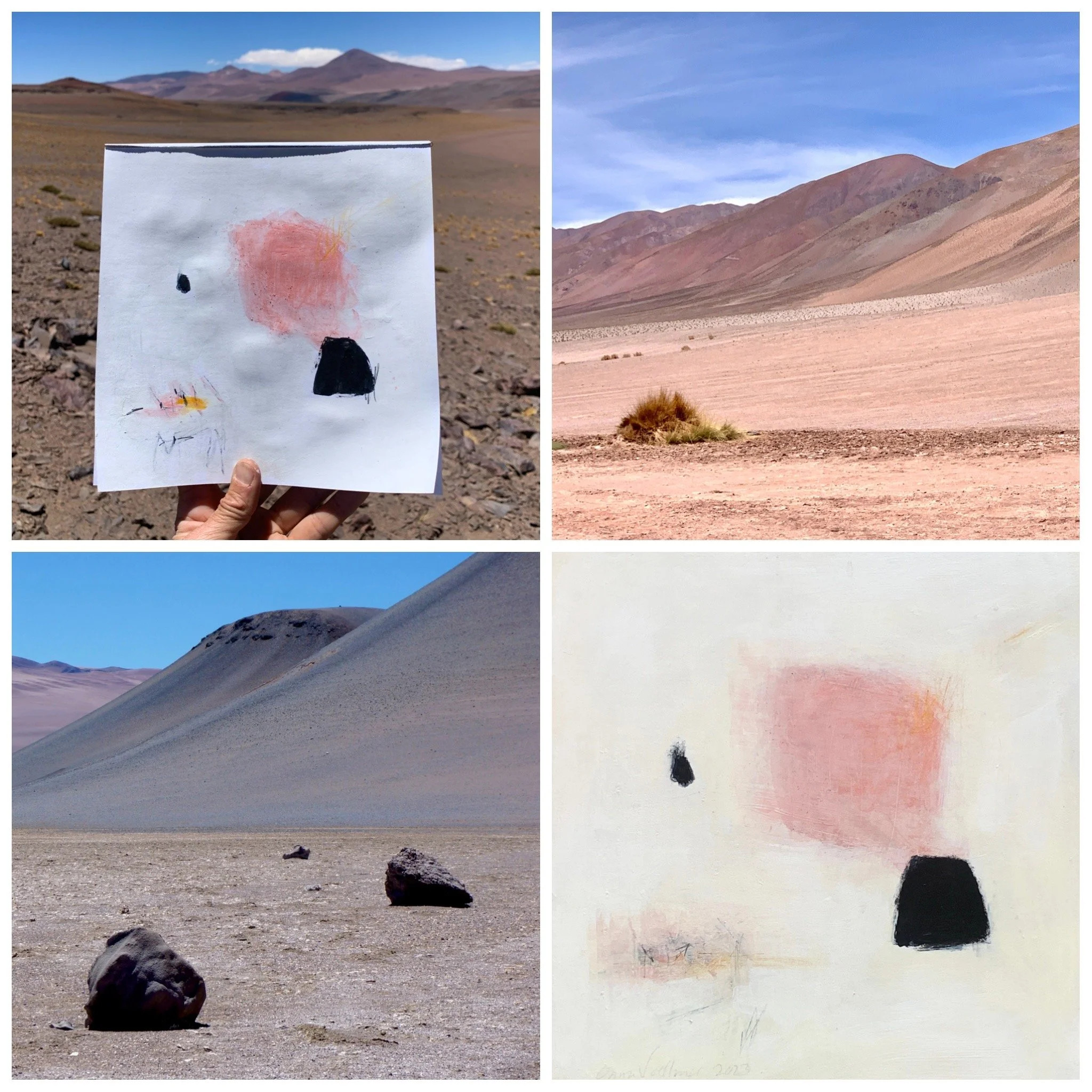
Highland Crossing no.1—in process and finished—from my bicycle travels on the Ruta de Los Seis Miles in the Atacama Desert in Argentina—together with a couple of my photos of the landscapes I traveled through.

MY SHAPES AND MARKS - 2
Last night’s sunset from my studio in New Mexico and a painting from five years ago in Arizona. …another example of how I see things and how I see nature and places.
When I first moved to Arizona thirteen years ago, it was the sunset that first captured my gaze, puffy clouds and bountiful colors, every single night. I spent the first several years of my time there watching them, documenting them, and just getting lost in them. The painting in the collage photo set below, painted in Arizona, is from five years ago—long after my gaze had turned more to the big blue skies and sun bleached grasses. But even still, its relationship to those Arizona skies and heavy monsoon rain clouds is ever more obvious to me now.
The sunset image in the collage photo set is from last night’s sunset taken from my studio here in New Mexico. The sunset colors, on thick clouds high in the sky, with light caressing the horizon below, is a common feature in sunsets. After taking the photo I was struck by the shapes in it and immediately made the relationship between it and my painting.
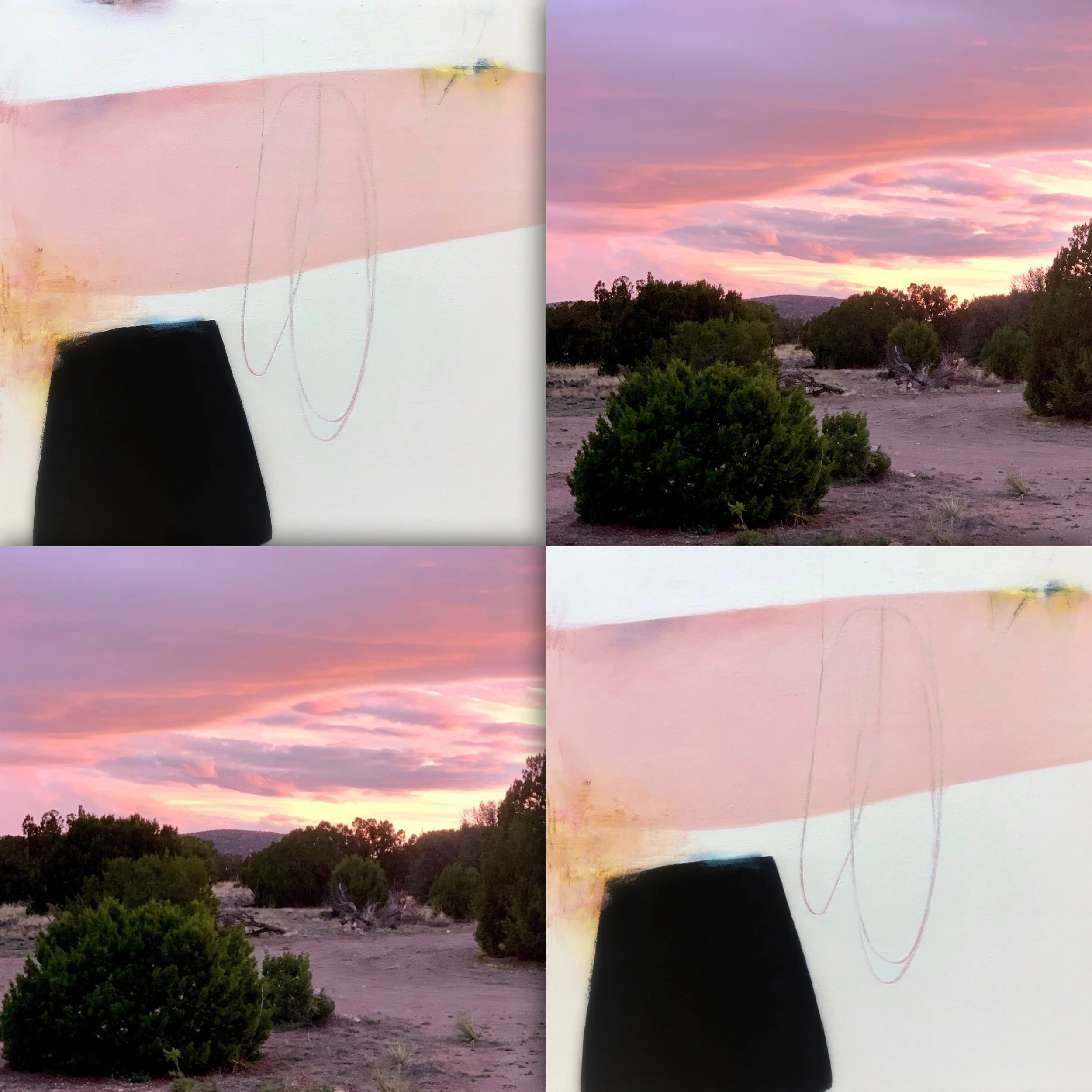
Last night’s sunset from my studio in New Mexico and a painting from five years ago in Arizona. …another example of how I see things and how I see nature and places.
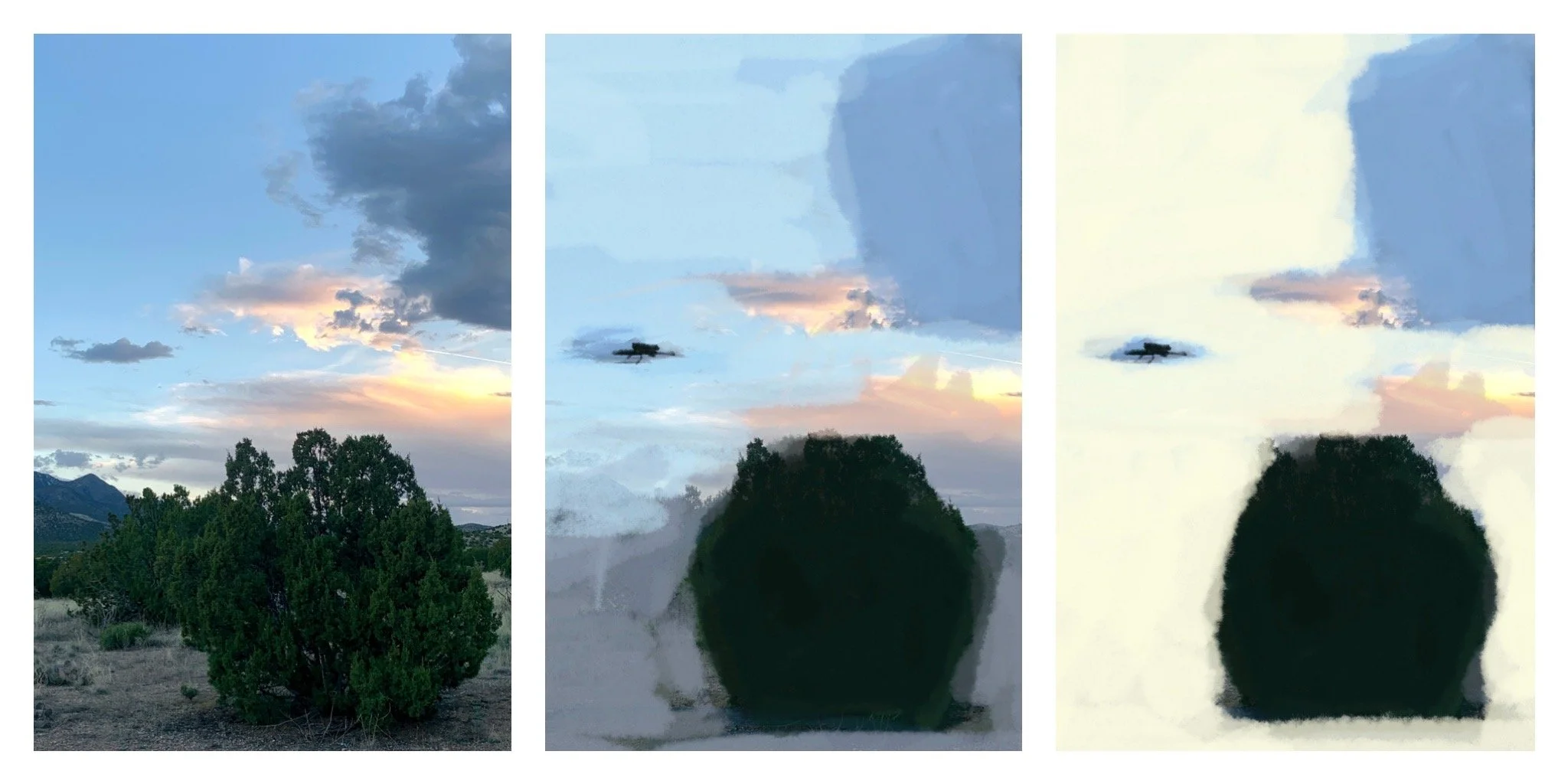
MY SHAPES AND MARKS - 1
I’ve digitally blocked in elements of my sunset photo to illustrate how I see compositional elements in a landscape, and to provide some context for how places inspire my work.
It has been awhile since I’ve written about my work here. So I wanted to share how bits of my inspiration translate into my artistic language. And while every painting isn’t usually inspired by a specific landscape composition, I think these images provide a window into how I see things.
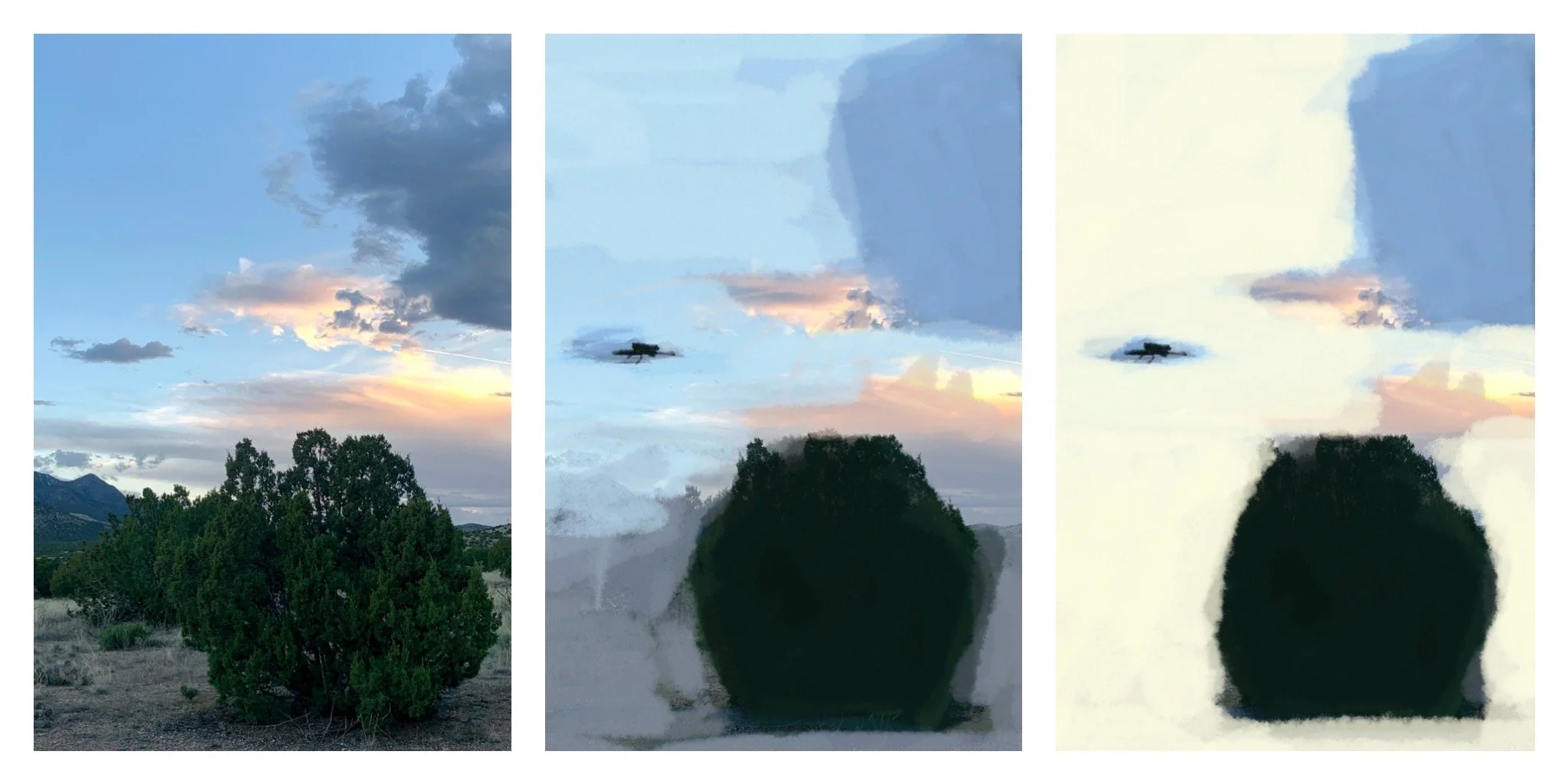
Transitional images of how I see the composition of my sunset photo.
I’ve digitally blocked in elements of my sunset photo to illustrate how I see compositional elements in a landscape, and to provide some context for how places inspire my work. And while I don’t really paint landscapes, I am inspired by our connection to nature and how a place influences our perception of it.
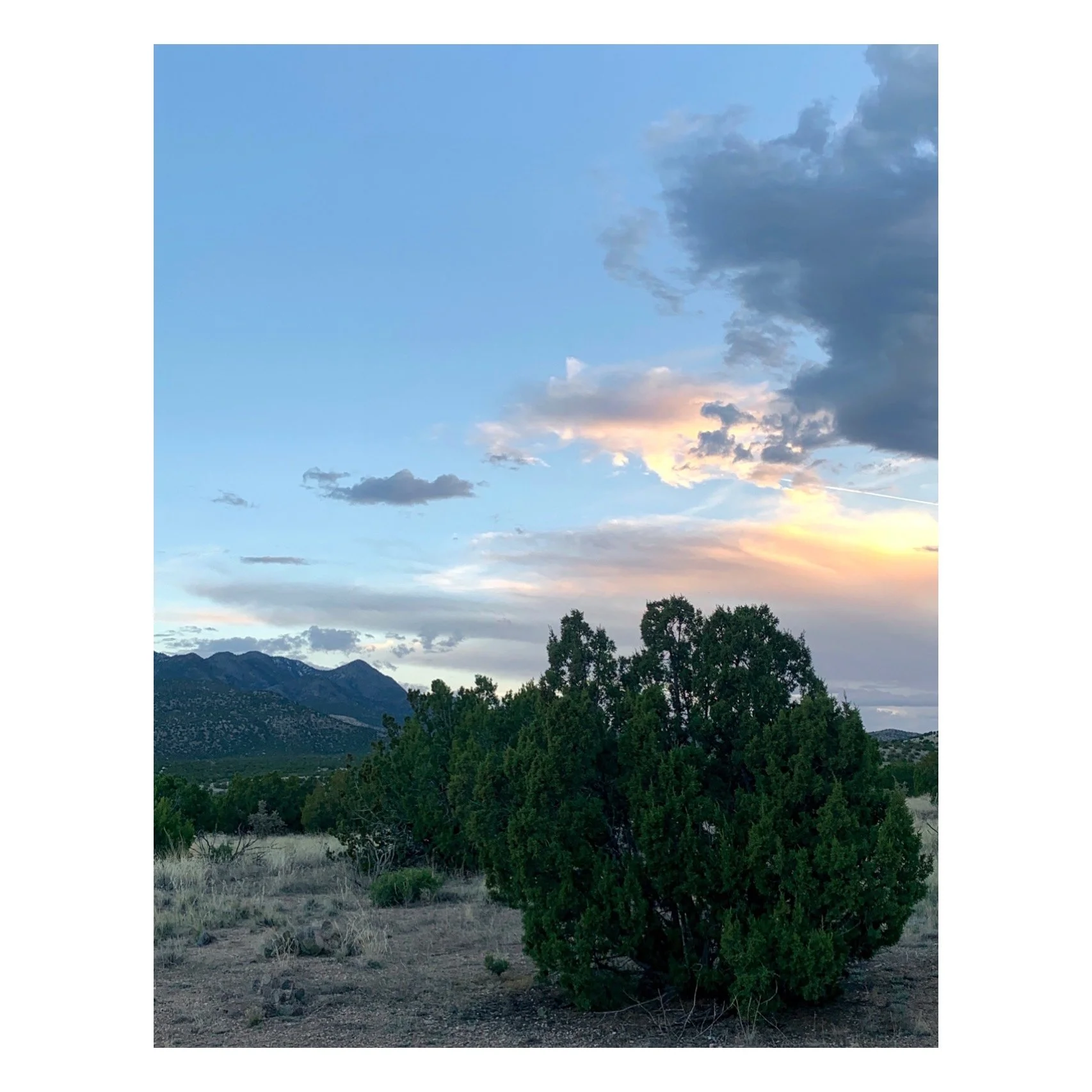
My sunset photo, taken from my home in Northern New Mexico.
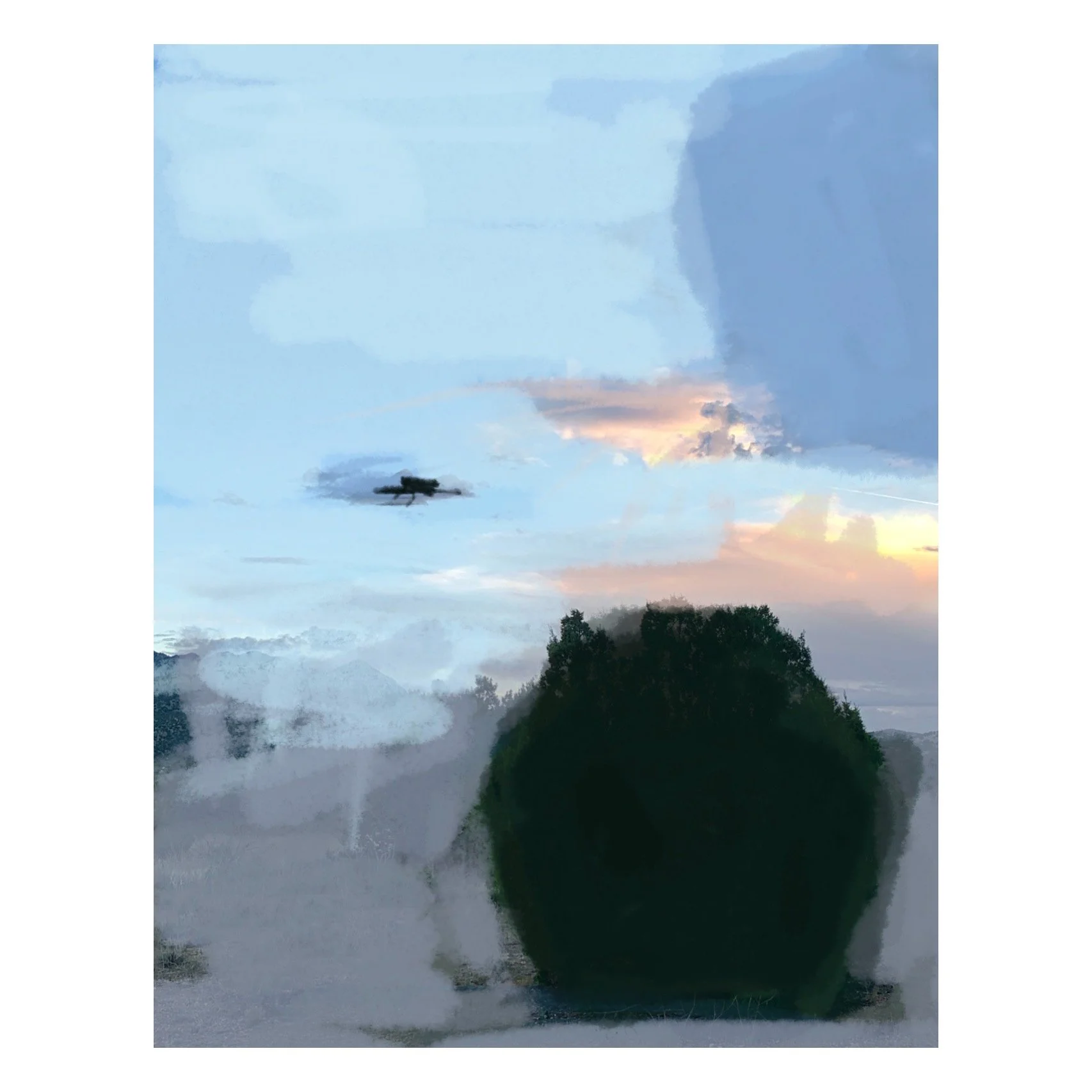
I used Pocket, the mobile version of the app Procreate, to block in the landscape elements that stand out to me.
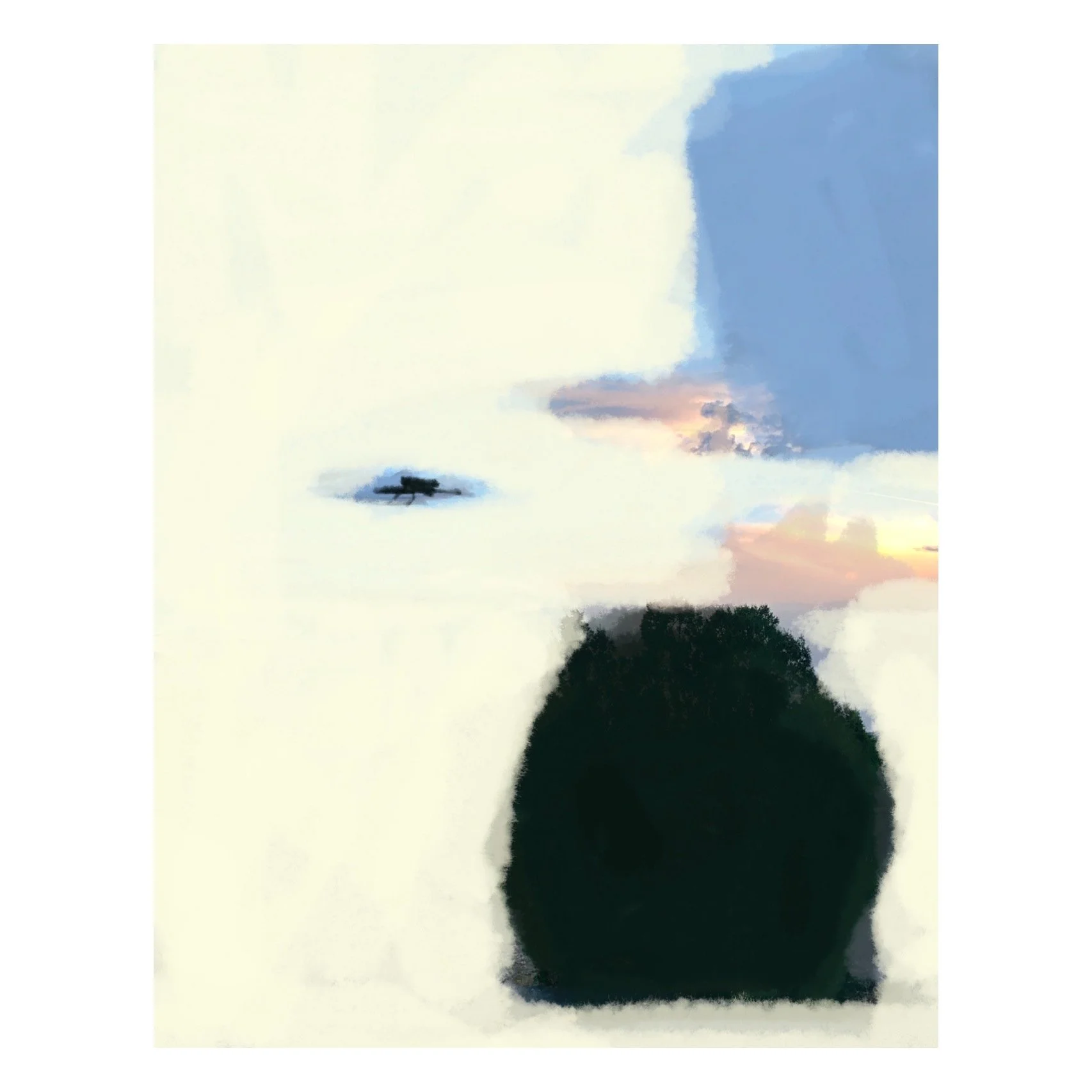
I blocked in the background in a warm white to remove all the distracting elements.
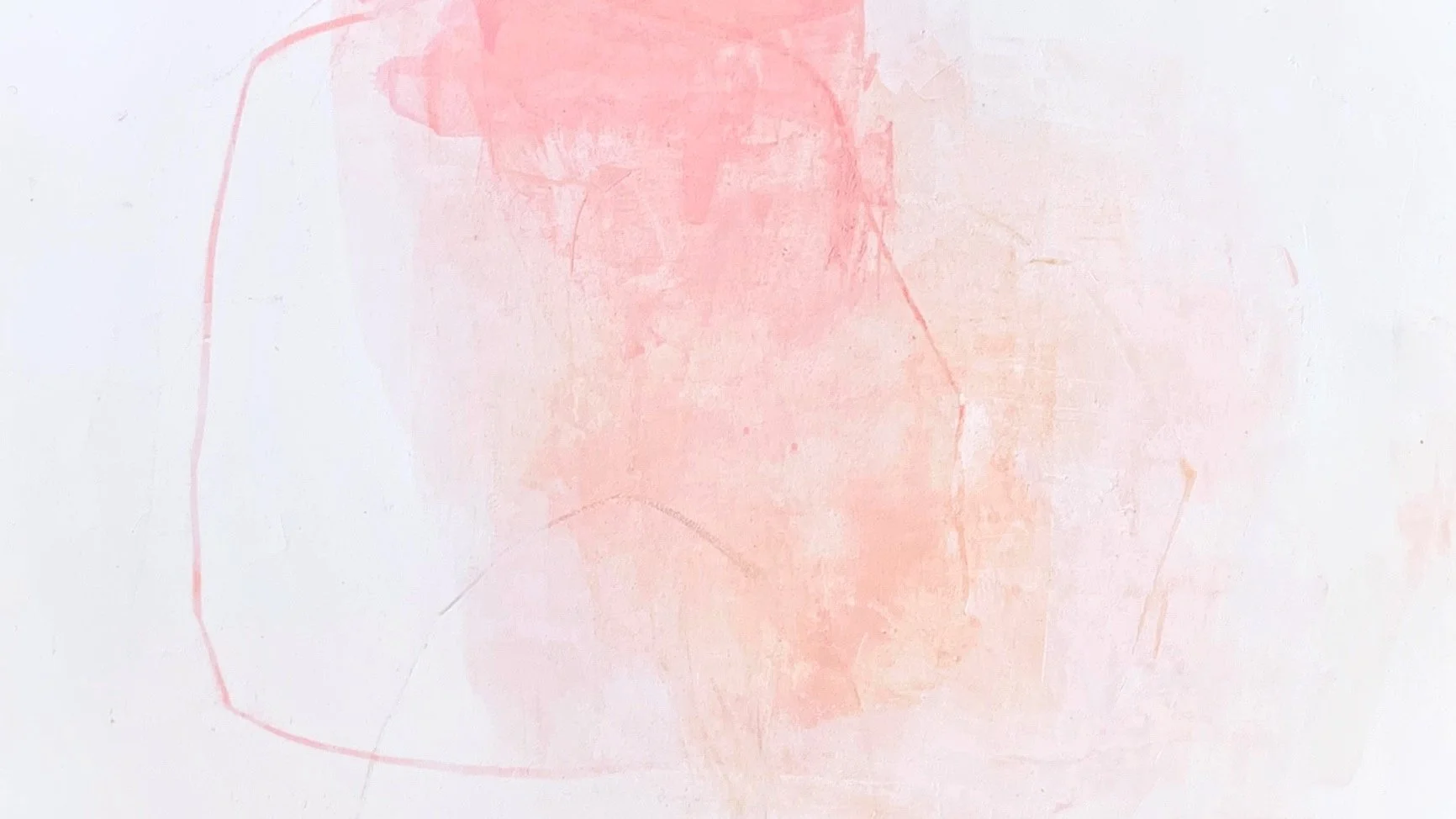
IF TO HEAL A LAND
…in gratitude and reciprocity, in remembering, and ritual—here we are whole.
If to heal a land, one must first develop a relationship with it, then the same is true of self. We must first develop a relationship with self before we can heal.
And in self, on is never alone, because the land and the self are a reflection of one another. Those deepest parts of self, the ones places are made of, are where the healing begins …in gratitude and reciprocity, in remembering, and ritual—here we are whole.